

Every year around February, my inbox fills up with the same question in different words: “Who gets to claim our kids?” For co-parents, tax season can reopen old fights fast. One parent assumes it’s their turn, the other already filed, and suddenly you’re arguing about money you thought was settled. The fix isn’t a better argument. It’s a written agreement you make once.
Here’s how the basic rules work, the options co-parents use, and how to put it in your parenting plan.
Why the Dependent Question Comes Up Every Year
Most parenting plans cover pickups, holidays and school. A lot of them say nothing about taxes. So each year, parents rely on memory, texts or a verbal deal from two years ago. That’s how the fight starts.
New partners can add pressure too. A new spouse may file jointly with your co-parent and expect the child to be on that return. Grandparents who help with childcare may have opinions. Suddenly a question that used to be between two people involves four or five, and nobody has the same version of the deal.
A quick note before we go further: I’m a mediator, not a tax preparer. What follows is general information to help you understand the conversation. Your agreement should always be checked by a tax professional who knows your situation.
What the IRS Means by Custodial Parent
For federal tax purposes, the custodial parent is generally the one the child lived with for more nights during the year. That’s a count of nights, not a label in your custody order. “Joint custody” doesn’t settle this on its own.
If your schedule is close to 50/50, the night count can come down to a handful of days. That’s why a holiday swap or a long summer trip can quietly change who counts as custodial for that year.

What Can Be Shared and What Can’t
Here’s where most confusion comes from. The custodial parent can sign IRS Form 8332, which allows the other parent to claim the child for certain benefits, like the child tax credit.
But some benefits generally stay with the parent the child actually lived with, such as head of household filing status and the earned income credit. So “letting your ex claim the kids” doesn’t always move every benefit, and it doesn’t always mean what both parents think it means.
Don’t Forget California’s Side of the Return
Your state return matters too. California has its own head of household status and dependent credits, and the rules mostly follow the federal ones, but not in every detail. When you make your agreement, ask your tax preparer to look at both returns, not just the federal one. A plan that looks fair on the federal side can tilt a little when the state numbers come in.
This is exactly why a vague “we’ll alternate” text often fails. Each parent pictures a different set of benefits moving back and forth.
3 Ways Co-Parents Settle the Tax Question
There’s no single right answer. The best choice depends on your incomes, your schedule, and how many children you have. Here are the approaches I see work most often.
Alternating Years
One parent claims the child in even years, the other in odd years. It’s simple and feels fair, which is why it’s so popular. It works best when both parents earn enough to benefit from the credit in their year. If one parent’s income is too low to use the credit fully, alternating can leave money on the table for the family as a whole.
A practical tip: tie the years to something you won’t forget. “Mom claims in even tax years, Dad claims in odd tax years” is clearer than “we take turns starting next year.” Two years from now, nobody will remember what “next year” meant.
Splitting Kids
With two or more children, some parents each claim one child every year. It’s predictable, and nobody has to keep track of whose turn it is. It gets trickier if the kids are far apart in age, since one child may age out of certain benefits sooner.
Tying It to Expenses
Some co-parents decide the parent who covers more of the child’s costs, like childcare, health insurance or activities, gets to claim the child. Others agree that one parent claims every year and shares part of the refund with the other. This takes more trust and clear numbers, but it can put more money toward the kids overall. If you’re already sorting out who pays for what, our household and financial responsibility agreements can bring all of it into one plan.

Putting the Tax Agreement Into Your Parenting Plan
Whatever you choose, write it down in your parenting plan. A text thread isn’t enough. A clear clause protects both of you when memories fade or new partners start asking questions.
When we do parenting plan development, taxes become one more section of the plan, right next to holidays and school decisions. It’s not a separate battle anymore. It’s just part of how your family runs.
What to Write Down So February Stays Quiet
A strong tax clause usually answers these questions:
- Who claims each child, and in which years?
- When will the custodial parent sign Form 8332, and by what date each year?
- What happens if one parent is behind on agreed child-related expenses?
- What happens if the schedule changes enough to shift the night count?
- When will you revisit the clause, such as when a child turns 17 or starts college?
What to Do If You Both Already Filed
It happens more than you’d think. Both parents claim the same child, one return gets accepted, and the other gets flagged. The IRS has tie-breaker rules for this, but those rules don’t care about your verbal agreement. They look at things like where the child lived and parents’ incomes.
If you’re in this spot now, don’t panic and don’t fire off an angry text. Usually one parent amends their return to fix it. Then use the experience as the push to put a clear clause in writing so it doesn’t happen again next year. Many of the tax clauses I help draft come from exactly this situation.
It’s also worth keeping this separate from child support. Who claims the child can affect each parent’s after-tax income, which can matter in support calculations. If support is part of your case, mention the tax plan to whoever is helping with the support numbers.
That last question matters more than people think. Kids grow, incomes change, and a clause that worked when your child was four may not work at fourteen. Building in a review date keeps the agreement fair over time.
If you’re in a high-cost area like Encinitas or Carlsbad, where childcare and activity costs run high, it’s worth running a few scenarios with your tax preparer before you lock anything in. A good agreement balances fairness with what actually keeps the most money with your kids.
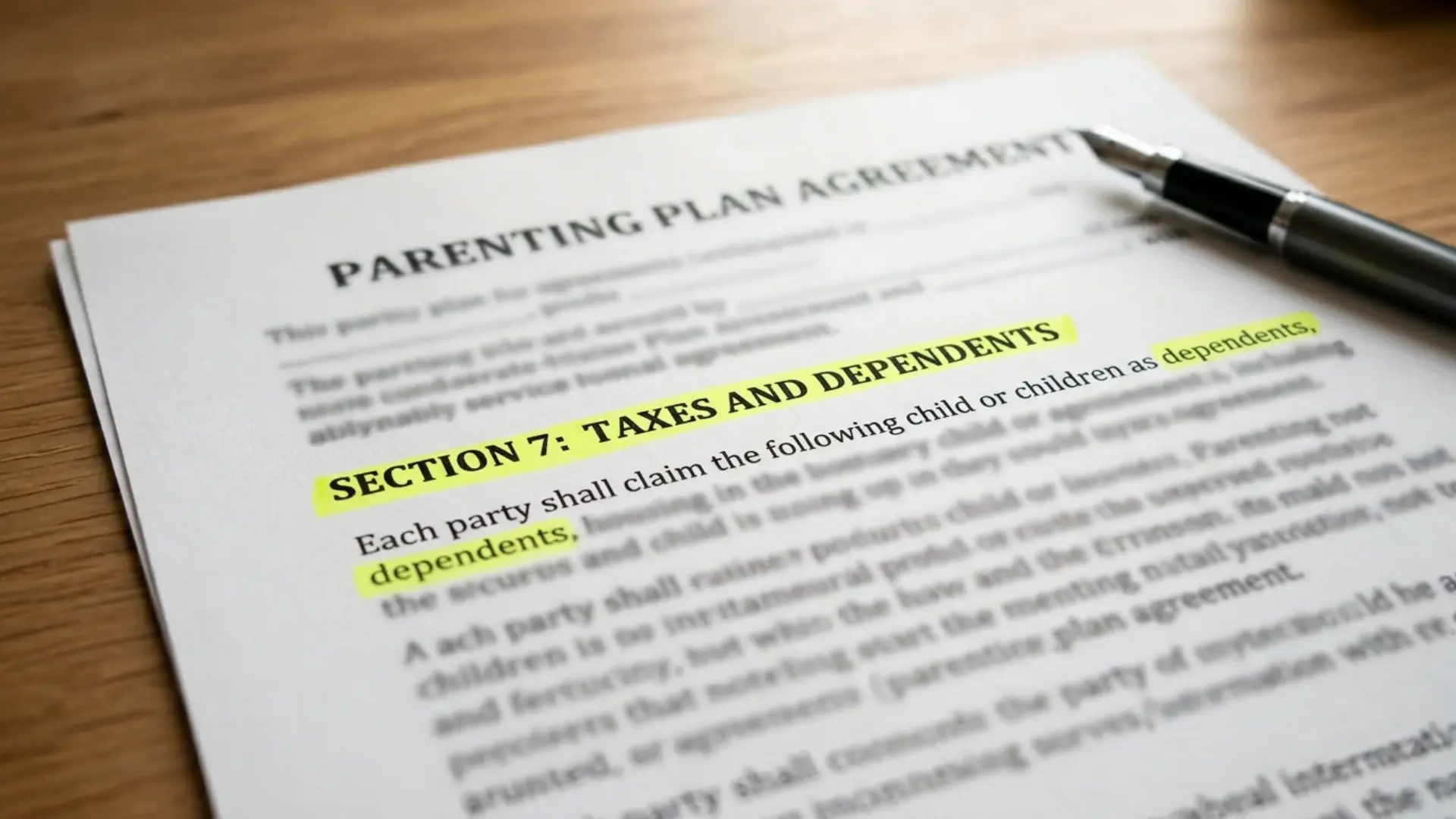
And keep the clause in the same place as the rest of your plan. If your parenting plan becomes part of a court order, the tax terms sit right alongside custody and support, which makes them much harder to ignore or “forget.”
Through co-parenting mediation, we can work through this together on Zoom or in person, and draft language your tax preparers and attorneys can review.
Settle It Once, Not Every Spring
The tax question isn’t really about forms. It’s about trust. When there’s no clear agreement, every February becomes a test of whether your co-parent will play fair. When it’s written down, it’s just a date on the calendar. If you’re heading into another tax season with no agreement, or with one that keeps causing fights, now’s a good time to fix it. A single focused session can turn a yearly argument into one clear clause both of you understand and both of you signed.
Add a Tax Clause to Your Parenting Plan
Ready to stop arguing about taxes every year? Book a free consultation with Common Ground Mediation and we’ll talk through how to build a tax agreement into your co-parenting plan.