

If you’ve been told you have a Family Court Services appointment, you probably assumed it’s a private, off-the-record mediation. That’s what most parents think. In San Diego, it isn’t. What you say to the court counselor can end up in a written recommendation to the judge. I’m not saying that to scare you.
I’m saying it because you deserve to know before you walk in. Here’s how the court process works, how private mediation differs, and how to decide which fits your family.
What Happens at San Diego Family Court Services
When parents disagree about custody or visitation and one of them files with the court, San Diego Superior Court sends them to Family Court Services before the hearing. You’ll meet with a court counselor, usually with the other parent in the same session. The counselor tries to help you reach an agreement. If you don’t agree on everything, the counselor writes a recommendation for the judge on what’s left.
Why the Court Calls It “Recommending Counseling” Now
San Diego used to call this process “mediation.” It’s now called child custody recommending counseling, and the name change matters. A mediator helps you decide. A recommending counselor helps you decide, and if you can’t, tells the judge what they think should happen.
That shifts the whole feel of the room. Every parent knows they’re being evaluated, even when the counselor is kind and fair. Parents tell me they spent the whole appointment choosing every word, worried that one honest sentence would be read the wrong way. People get guarded. They perform. And honestly, that’s a reasonable response when your time with your kids is on the line.
What the Counselor Can Share With the Judge
The court’s own information sheet says that what parents share in these sessions is not confidential to the court. So if you mention that your ex was late for pickup three times, or that you’ve been struggling since the separation, that can show up in the report.
The court session also has limits. It covers custody and visitation. It doesn’t handle child support, spousal support or property, so those stay on your to-do list either way.

How Private Custody Mediation Works Differently
Private mediation is a separate process you choose and pay for yourselves. The goal is the same: a parenting arrangement that works for your kids. But the rules around it are very different.
Confidentiality Under California Mediation Law
California law generally protects what’s said in private mediation. What you say in our sessions can’t be used as evidence in court, with limited exceptions, such as child safety concerns. I don’t write a recommendation to a judge. My only job is to help you two reach decisions you both sign.
That changes how people talk. When parents aren’t worried about a report, they say what’s actually going on. “I’m nervous about overnights because she’s only three” is a very different conversation from a defensive back and forth. Real concerns get solved faster when people can say them out loud.
Time, Format, and Who Shows Up
Court appointments run on the court’s calendar. Private mediation runs on yours. We can meet on Zoom, in person in North County, or in separate rooms if being face to face is too much right now. You can read more about our session formats to see what might fit.
Private mediation also isn’t limited to custody. In the same process, we can work through holiday schedules, school choices, how you’ll handle new partners, and even shared expenses. You leave with one complete plan, not a custody order plus a list of loose ends.
What a Private Custody Mediation Session Looks Like
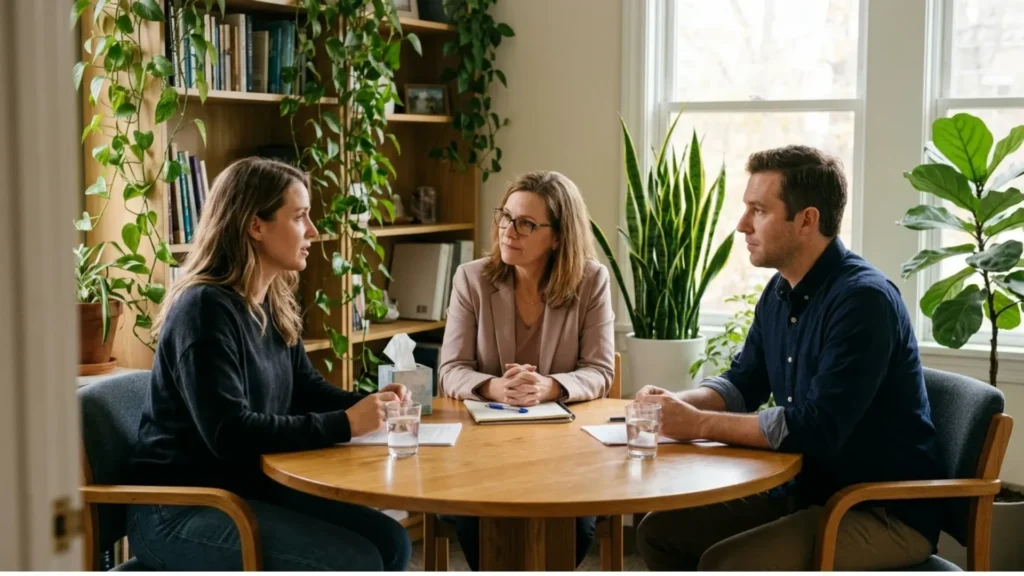
People often picture mediation as two parents arguing while someone takes notes. It’s much calmer than that. Before we ever meet together, each parent has a private intake, so I understand your concerns, your schedule, and what your kids need. You also get a preparation session through our client portal, so nobody walks in cold.
In the joint sessions, we work through one topic at a time. We might start with the weekly schedule, then move to holidays, then school and activities. I help you test ideas against real life. What happens on a teacher in-service day? What if one of you moves from Escondido to Oceanside? Who drives on Sunday nights?
When we’re done, you get a written parenting plan in clear language. If you want, your attorneys can review it before it goes to the court. Nothing gets filed until you’ve both read it and agreed.
Can You Skip Family Court Services if You Use a Private Mediator?
Often, yes. San Diego’s own court paperwork notes that before a judge rules on a disputed custody issue, parents must either attend the court’s recommending counseling or agree in writing to use private mediation instead. That written agreement is called a stipulation, and your attorney or the court’s self-help center can tell you how to file it in your case.
If you’ve already got a Family Court Services date, don’t just skip it. Cancel properly, and make sure the court knows you’ve agreed to private mediation. Missing an appointment without following the court’s process can cause problems.
What to Bring to Either Process
Whichever route you choose, preparation helps. Bring your current schedule, your kids’ school and activity calendars, and a short list of what matters most to you. Think about what your children need at their age, not just what feels fair between the adults. A toddler and a teenager need very different plans.
It also helps to write down your biggest worry in one sentence. Parents who can name their real concern, like “I’m afraid I’ll miss bedtime most nights,” tend to get it addressed. Parents who come in with a long list of complaints about the other parent usually don’t.
Which Route Fits Your Family?
Neither route is wrong. They’re built for different situations, and the best choice depends on your budget, your timeline and how much the two of you can work together.
Private mediation tends to fit parents who want their conversations to stay private, want to settle more than just custody, or want more control over timing and format. It’s also a strong fit when you mostly get along but need help with a few sticking points. Our child custody and visitation mediation is designed for exactly that.

When Family Court Services Makes Sense
There are good reasons to use the court process. It doesn’t carry an hourly fee. And if there’s a history of abuse or serious safety concerns, a court-connected process with oversight may be the safer route. In those cases, please talk to a family law attorney and take safety seriously. Private mediation isn’t the right tool when one parent is afraid of the other.
For everyone else, the question to ask is simple: do I want a recommendation, or do I want a decision we made ourselves?
Cost is part of the decision too. The court session doesn’t charge by the hour, but a court-driven case can still get expensive once hearings, attorney time and follow-up filings pile up. Private mediation has a clear hourly cost, and it often settles everything in one process. It’s worth comparing the whole path, not just the first appointment.
Timing matters as well. If your hearing date is weeks away and you’re both open to talking, starting private mediation now can give you an agreement before you ever reach the courtroom.
Once you’ve decided, the next step is turning your agreements into a plan you can actually live with. That’s where parenting plan development comes in, covering everything from school pickups to how you’ll handle a schedule change.
Know Who’s Listening Before You Speak
Most parents walk into a custody conversation thinking about what to say. Fewer stop to think about who’ll hear it. In San Diego, that question changes everything. The court process can work, but it’s built to end in a recommendation if you don’t agree. Private mediation is built to end in an agreement you wrote together, in a room where you can be honest. If you want your co-parenting plan to come from you, not from a report, it’s worth looking at your options before your court date arrives.
Talk to a Mediator Before Your Court Date
Have a Family Court Services appointment coming up, or want to avoid one? Book a free consultation with Common Ground Mediation and we’ll walk you through how private mediation could work for your family.